


Hormones are complicated.
And if you’ve experienced symptoms like fatigue, mood swings, acne, or fertility struggles, you know how frustrating finding answers can be. Is it really hormones? Which ones? Am I just sick? Do I need more sleep?
If you’ve been looking into hormone testing, you may have stumbled across the DUTCH test. But is the DUTCH test legitimate? What does it show? And how is it different from regular blood work?
I get questions like this a lot, and I’d like to share how I use the DUTCH test with clients here at Haven Birth and Wellness, when it’s most helpful, and why I believe it’s such a valuable tool when it comes to understanding what’s really going on inside your body.
What Is the DUTCH Test?
The DUTCH test is a functional lab test that provides a deep, comprehensive look at your body’s hormone landscape.
In simple terms, the DUTCH test shows us how your body produces hormones, how it uses those hormones, and how it eliminates or detoxes them. I find this especially helpful in women with symptoms that blood work alone doesn’t always explain.

Unlike blood tests, which only show us a snapshot of your hormone levels at one point in time, DUTCH tests analyze urine samples over the course of a day, or even a month. This allows us to see both hormone levels and hormone metabolites — little particles left behind in urine after your body uses and breaks down hormones.
Seeing how your hormones rise and fall and how your body breaks down and eliminates them — especially estrogen — helps us understand your symptoms and risks on a much deeper level.
How the DUTCH Test Works
The test is done entirely at home. You’ll collect dried urine samples using a special kit from DUTCH, and then send the kit to their lab.
There’s no need to come into the office for the test itself. It’s simple and private — a convenience most of my clients really appreciate.
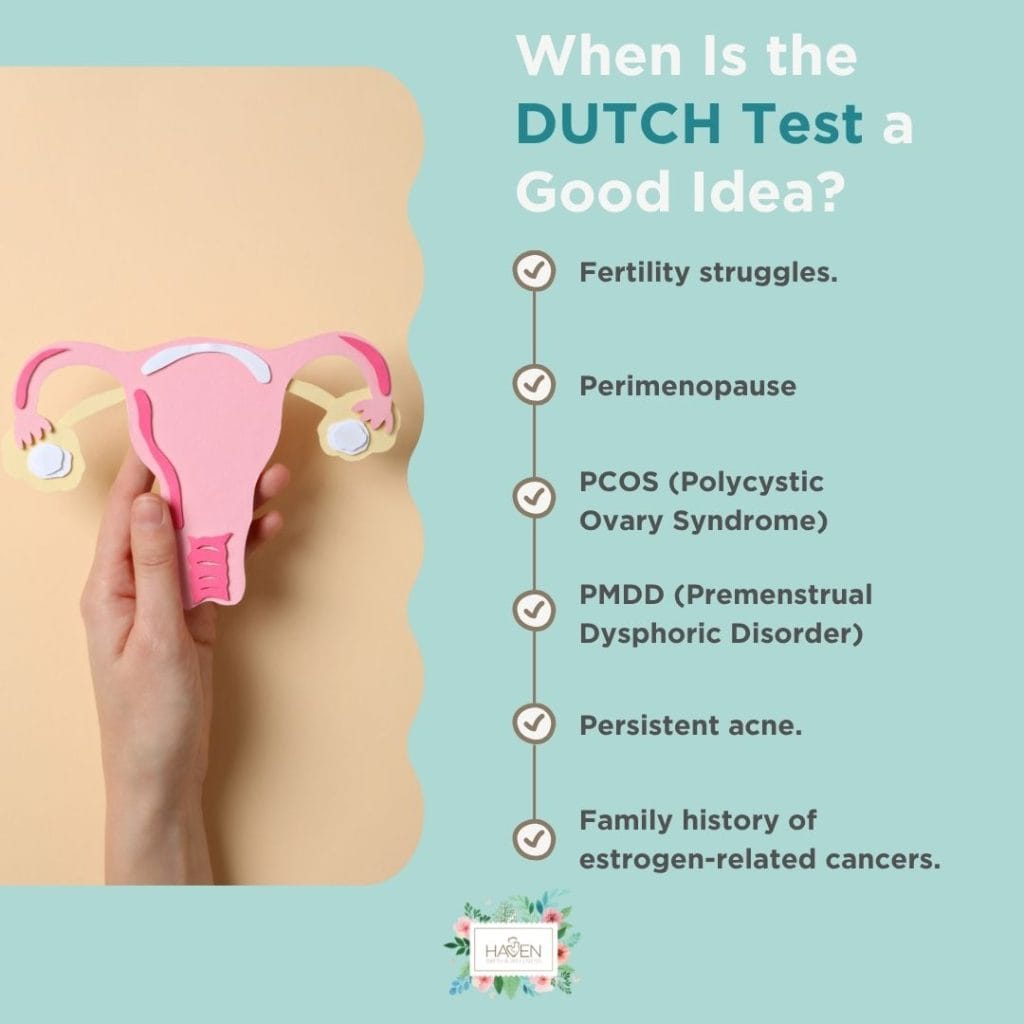
When Is a DUTCH Test a Good Idea?
There’s no one-size-fits-all answer, but I use the DUTCH test most often when someone is experiencing potential hormone-related symptoms that aren’t fully explained by standard labs.
Here are a few examples of when I find it particularly helpful:
- Fertility struggles: We can see if your body is making enough progesterone, which is crucial for sustaining a pregnancy.
- Perimenopause: When cycles change and perimenopause symptoms like weight gain, fatigue, or mood swings appear, the DUTCH test can help identify what’s going on behind the scenes and how to support your health.
- PCOS (Polycystic Ovary Syndrome): The DUTCH test provides a nuanced view of androgens and estrogen metabolism in PCOS sufferers, helping to identify potential imbalances and personalize treatments.
- PMDD (Premenstrual Dysphoric Disorder): The DUTCH test can help complement or personalize treatment for PMDD symptoms, such as severe mood shifts around your cycle.
- Persistent acne: The test can help pinpoint whether and which hormones are playing a role in severe or persistent outbreaks.
- Family history of estrogen-related cancers: We can use the DUTCH test to evaluate how your body processes estrogen, which can help us better understand and manage your future risk.
What Does the DUTCH Test Actually Show?
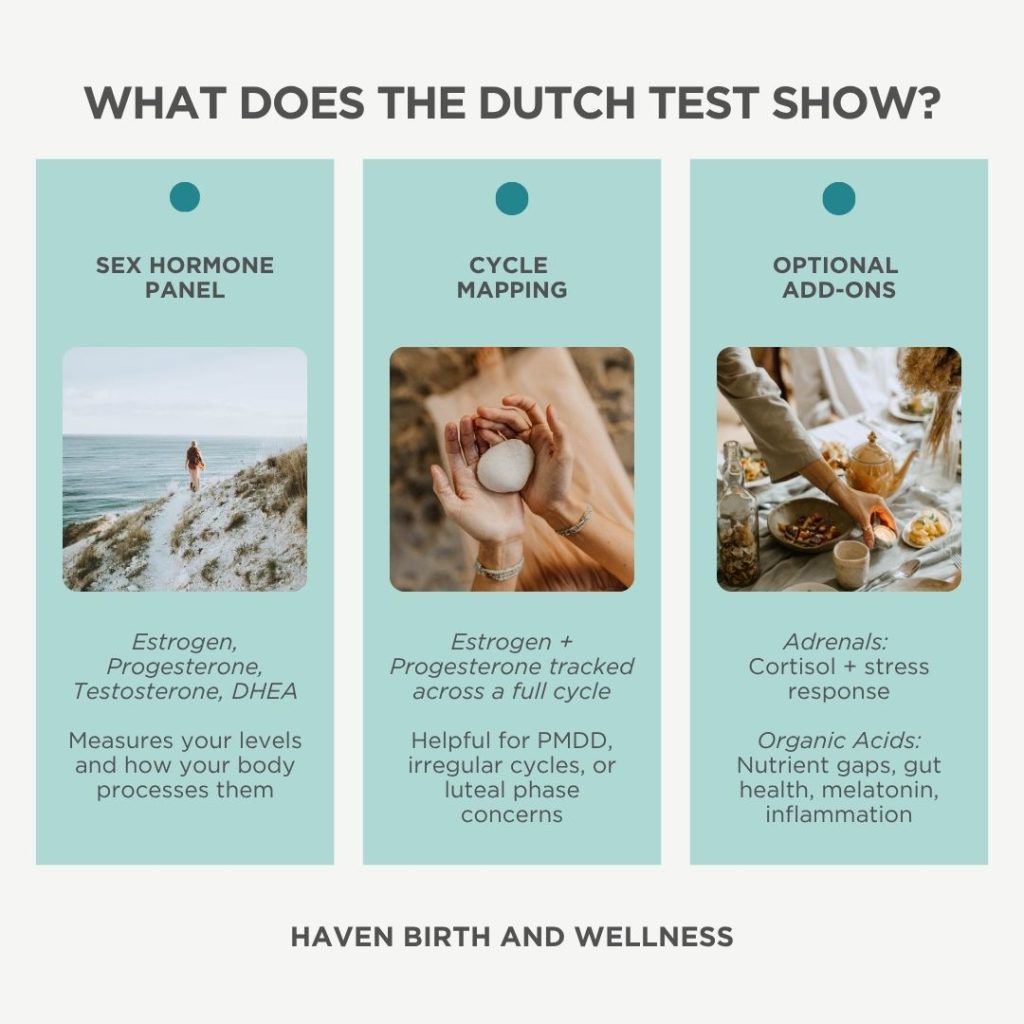
DUTCH offers several types of testing depending on your symptoms and goals. At Haven, I typically recommend either the DUTCH Sex Hormone Panel test or, in some cases, the Cycle Mapping test, to further investigate most clients’ symptoms.
DUTCH Sex Hormone Panel focuses on your core reproductive hormones, so it covers:
- Estrogen
- Progesterone
- Testosterone
- DHEA
We look not just at the levels, but also at how your body is metabolizing them.
Cycle Mapping looks specifically at estrogen and progesterone, but over a longer period of time. The full month of information this test provides lets us watch the rise and fall of hormones throughout your cycle, which can be especially useful in cases of PMDD or luteal phase dysfunction.
If needed, you can add additional DUTCH test panels to either option, such as:
- Adrenals: Focuses on cortisol and its metabolites as a way to measure stress response
- Organic acids: Evaluates potential nutritional deficiencies, oxidative stress, gut dysbiosis, melatonin levels, and neuroinflammation
How to Interpret a DUTCH Test
This part is so important.
Interpreting a DUTCH test isn’t a simple process. It’s not like the test gives one result and we automatically know what to do. Context matters — a lot.
That’s why I always require a wellness visit to accompany the test. I need to know your story, your symptoms, your medical history, and what you’re hoping to find out. Only then can I connect the dots, make sense of the results, and guide you forward in a way that’s meaningful and safe.
If you live in Tennessee but aren’t local to our office, we can explore telehealth options for a consultation — but this would be more of a lab review than a full provider-client relationship. Still, it’s a helpful starting point if you live farther away and want to explore whether a DUTCH test is right for you.
Is the DUTCH Test Legitimate?
I understand some skepticism. In fact, it’s healthy to ask questions in a market saturated with trendy health solutions and expert marketing.
What I can tell you is this: The DUTCH test is legitimate. It provides relevant results and really shines in evaluating estrogen levels, cortisol curve, and organic acids. I use it because I’ve seen how valuable it can be for certain clients, and because it fills in gaps that traditional labs may miss.
The DUTCH customer service is excellent, their company is reputable, and they truly care about the people they serve. As a provider, I appreciate the way they support me in interpreting results. In short, this is a company I trust that produces results I’ve seen with my own eyes.
Final Thoughts on the DUTCH Test
If you’re curious about your hormone health, struggling with unexplained symptoms, or just want a more complete picture of what’s going on, the DUTCH test might be a good next step. It’s not a blanket solution for every woman, but it can provide new insights in certain situations, such as when other tests have fallen short.
As a family nurse practitioner and registered provider for the DUTCH test, I’m happy to discuss this option with you. If you decide to try it, we’ll walk through the entire process together — from getting you the test kit (either from our office or via ordering) to interpreting the results and exploring what comes next.
You don’t have to figure this out on your own.
Reach out to schedule a wellness visit and let’s get started.
Search
Stay up to date
Helpful, honest information for every stage of womanhood — straight to your inbox.
Katherine Jacobs, RN, MSN, FNP-BC
Katherine Jacobs is a board-certified Family Nurse Practitioner with nearly two decades (17 years) of experience in pediatrics and women's health, along with specialized training from The Institute of Functional Medicine. She focuses on identifying the root causes of illness and guiding patients toward optimal health through personalized, holistic care. With a commitment to integrating lifestyle choices and environmental factors into her treatment plans, Katherine is dedicated to empowering her patients on their wellness journeys. Outside of work, she enjoys outdoor adventures, baking, and spending time with her family.
Disclaimer: The content on the Haven Birth and Wellness website is created and/or reviewed by qualified Certified Nurse Midwives and healthcare professionals. We strive to provide accurate and detailed information for our readers. However, this blog is intended for informational purposes only and should not be considered a substitute for professional medical advice. Your own healthcare provider is best equipped to understand your unique situation and medical history. Always consult with your healthcare provider before making any decisions that may affect your health.